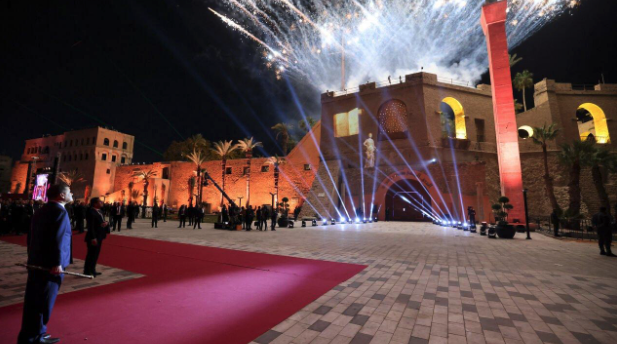
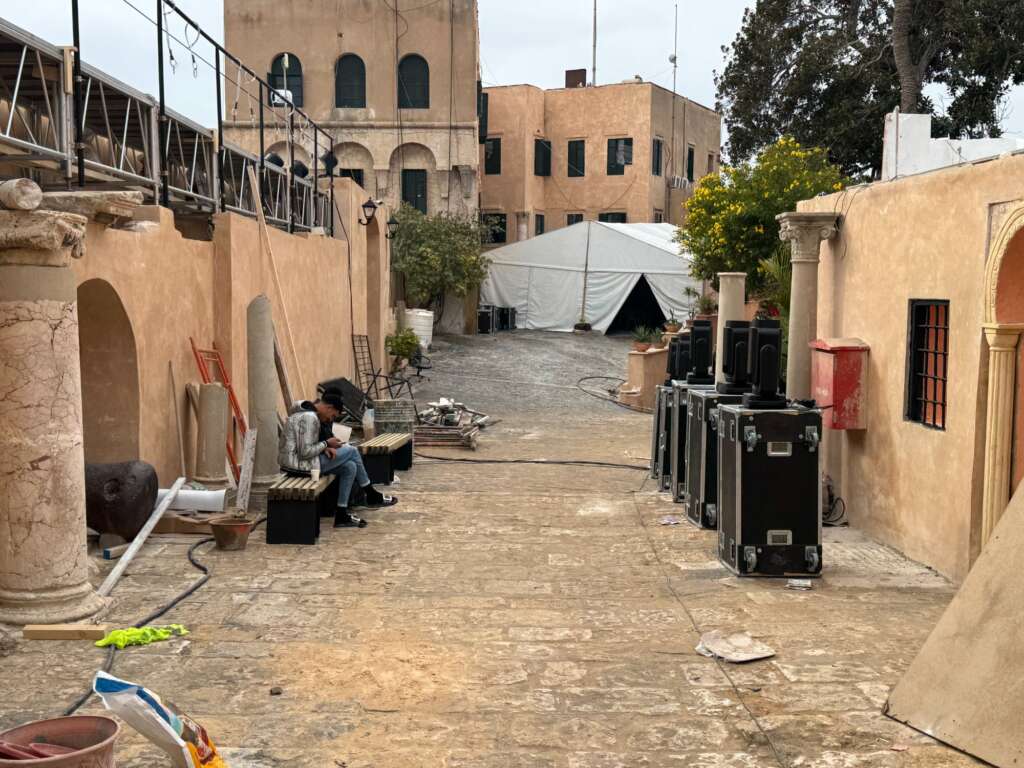
In late 2025, Inoltra executed a time-critical project logistics operation supporting the reopening of Libya’s National Museum at the Red Castle (As-Saraya Al-Hamra) in Tripoli, alongside a major public event in Martyrs’ Square produced by Balich Wonder Studio.
The operation required controlled movement of specialised event and staging equipment from Italy to Libya under a temporary export procedure in Italy and a mirrored temporary admission clearance framework in Libya, with full documentation closure on return.
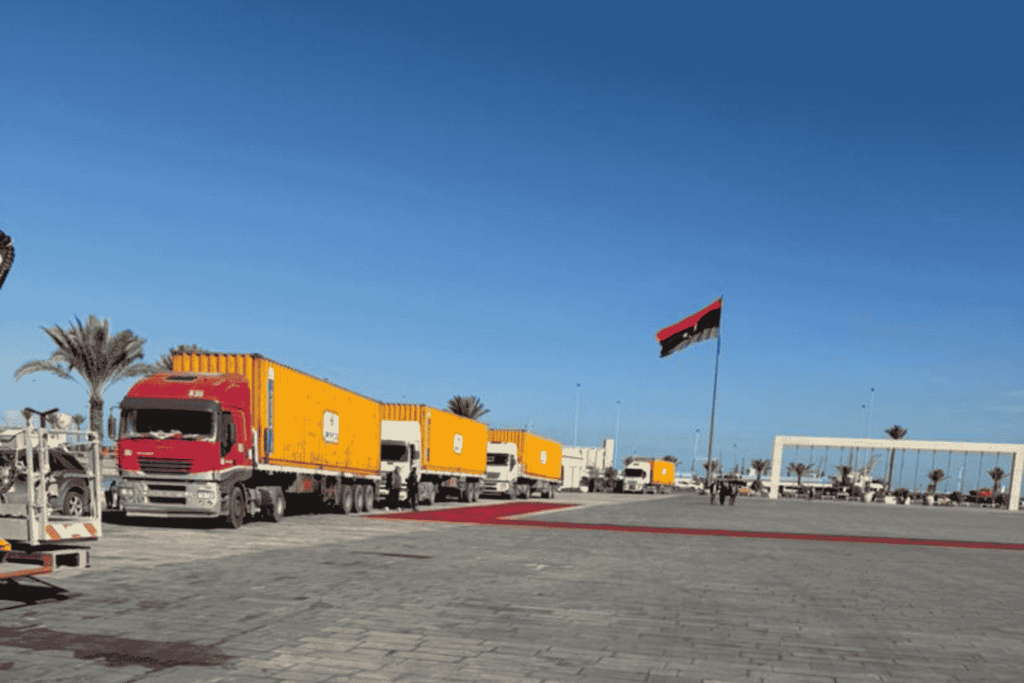
Project snapshot
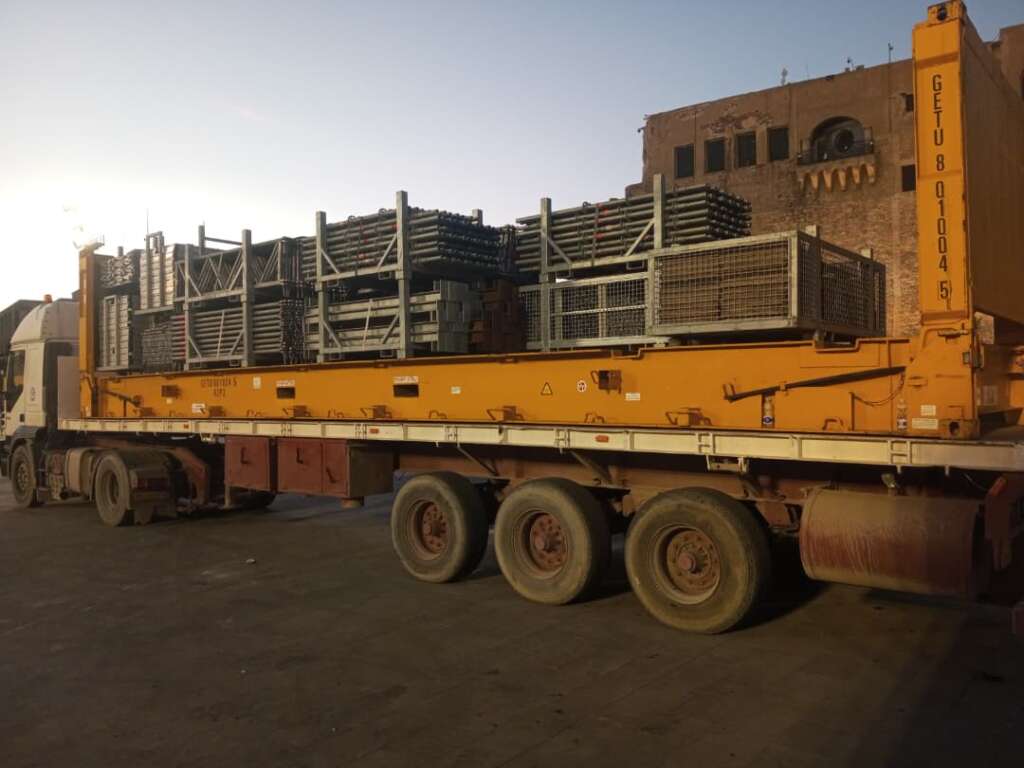
- Scope: Specialised scaffolding, staging and production equipment moved Italy → Tripoli, then re-exported to close the temporary regime.
- Cargo volume: 600+ m³.
- Declared value: €3.5M across multiple equipment categories.
- Stakeholders: 4 separate exporters plus port, customs, shipping line, Libyan authorities, and production team interfaces.
Schedule constraint: Event date fixed (December 12, 2025) with high visibility and no postponement tolerance.
Why this was not “standard freight”
This project had five non-negotiable complexity drivers:
- Multi-exporter orchestration
One shipment plan, four documentation stacks. Each exporter had distinct packing lists, values, and customs requirements, all needing alignment before cargo could be cleared and loaded. - Temporary export and temporary admission control
The operation ran under temporary export authorisation in Italy and a mirrored temporary import clearance in Libya. That meant item-level declarations, inspection scheduling, seal management after inspection, and a complete return paper trail to close both sides of the regime. - Time-critical economics
Rental costs were accumulating daily and the vessel window was fixed (ETD La Spezia Nov 21, ETA Tripoli Nov 26), with on-site availability required for installation and rehearsals before the event. - Cross-border regulatory navigation
Italy side controls included HS-code discipline, IMDG/ADR compliance checks where applicable, and issuance of export authorisations; Libya side required permits, port authority alignment, and clearance execution for temporary entry tied to a high-profile public event.
High-value cargo risk posture
Cargo value and public visibility demanded a conservative risk posture, including marine cargo insurance structured with ICC(B) plus War & Strikes and additional extensions for handling stages (loading/unloading) and theft/non-delivery exposures.

Execution model: a controlled 7-phase runbook
Inoltra managed the project as a phased operation with explicit clearance gates and handoffs:
Phase 1. Pre-departure consolidation (Nov 18–20)
- Consolidated packing lists from all exporters
- Normalised container identifiers and seal numbers
- Resolved documentation discrepancies before customs submission
Phase 2. Italian customs clearance (Nov 19)
- Documentary control and final packing-list corrections
- Temporary export authorisation secured
- Weight verification and final clearance obtained
Phase 3. Vessel loading and departure (Nov 20–21)
- Containers released to carrier and loaded
- ETD La Spezia confirmed (Nov 21)
Phase 4. Sea leg with coordinated pre-clearance (Nov 21–26)
- Schedule monitoring and readiness checks
- Libya-side documentation prepared in parallel with Tripoli office
Phase 5. Arrival, temporary admission clearance, inland delivery (Nov 26–27)
- Arrival on schedule (Nov 26)
- Temporary import authorisation processing and customs clearance
- Inland delivery to Red Castle and Martyrs’ Square, with confirmation of successful clearance (Nov 27)
Phase 6. On-site delivery support through event day (Nov 27–Dec 12)
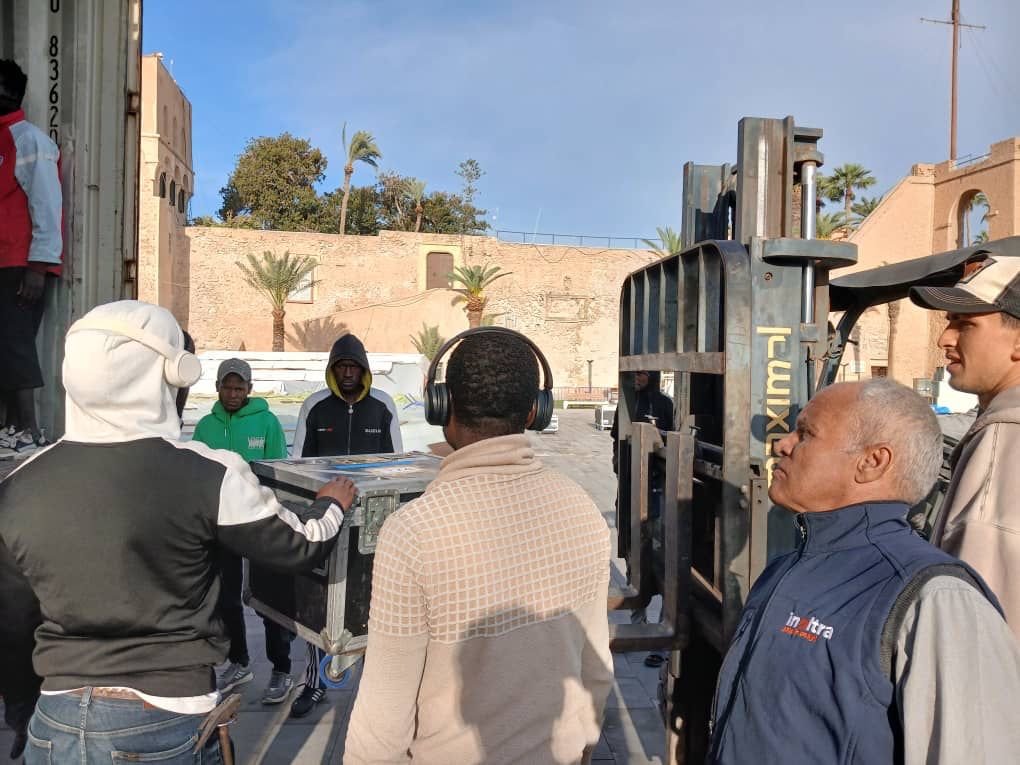
- Equipment staged at site for setup, rehearsals and execution
- Coordination touchpoints maintained during critical days leading into Dec 12
Phase 7. Reverse logistics and regime closure (Dec 13–26)
- Containers positioned on-site for immediate repacking
Return movement planned specifically to close the temporary export regime with pre-prepared re-import declarations
Controls that prevented failure
This operation succeeded because it was treated as a compliance-controlled project, not a shipping task:
- Master data discipline: HS codes and packing lists aligned exporter-by-exporter to avoid holds and rework
- Inspection and seal governance: preventive inspections, re-sealing, and traceable seal integrity to protect chain-of-custody
- Single coordination hub: daily status cycles across authorities, terminal, carrier, and Libyan partners to keep decisions centralised and auditable
- Insurance and risk framing: coverage designed for the actual risk envelope (war/strikes, handling, theft/non-delivery), not generic “cargo insurance.”
Outcome
- Schedule performance: on-time departure (Nov 21) and on-time arrival (Nov 26), with no event delays
- Customs performance: zero rejections, zero holds/detentions, complete audit trail, all exporters approved first time
- Cargo integrity: zero loss, zero damage claims, seal integrity maintained, €3.5M protected
- Client sign-off received: all milestones accepted with zero exceptions, holds, or rework.
Practical takeaways for project owners moving equipment into Libya
- Temporary admission is a project, not a form. Build the reverse-logistics closure path on day one.
- Seal control is operational control. If inspection and resealing are in the flow, treat seal numbers as controlled data, not notes in an email thread.
- Multi-exporter moves fail on inconsistency. A single master packing list structure (HS code, values, weights, case count) prevents cascading clearance issues.
Pre-clear in parallel. On constrained vessel windows, clearance readiness must run alongside the sea leg, not after arrival.
Inoltra Forward Shipping
Inoltra is an international logistics operator specialising in controlled execution across complex corridors, including North Africa, the Middle East, and emerging markets. We manage freight, customs coordination, and inland delivery where compliance, documentation discipline, and schedule control are non-negotiable. Our focus is not shipment volume, but operational certainty.